Affordable and clean energy
-
Curator Hour on “Green Energy: Solar and Wind Power” Held within the “Taza Kazakhstan” Campaign
🇰🇿 Қазақша нұсқасы
«Таза Қазақстан» акциясы аясында «Жасыл энергия: Күн және жел энергиясы» тақырыбында кураторлық сағат өтті
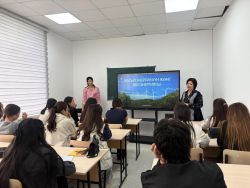
9 сәуір күні 402-аудиторияда «Қалдықтарды басқару» білім беру бағдарламасының 1 курс студенттері ұйымдастырған «Жасыл энергия: Күн және жел энергиясы» тақырыбында кураторлық сағат өткізілді.
Іс-шара барысында қатысушылар жаңартылатын энергия көздерінің маңыздылығы, күн және жел энергетикасының артықшылықтары, сондай-ақ олардың қоршаған ортаға келетін зиянды азайтудағы рөлі туралы пікір алмасты. Студенттер жасыл технологиялардың дамуы жөнінде қызықты мәліметтер ұсынып, экологиялық мәселелерді талқылап, Қазақстандағы тұрақты энергетиканың болашағы жөнінде ой бөлісті.
Сонымен қатар табиғи ресурстарды ұтымды пайдалану, парниктік газдар шығарындыларын азайту және жастар арасында экологиялық жауапты өмір салтын қалыптастыру мәселелеріне ерекше назар аударылды.
Осындай іс-шаралар студенттердің экологиялық сауаттылығын арттырып, табиғатқа ұқыпты қарау мәдениетін қалыптастыруға және тұрақты даму қағидаттарын насихаттауға ықпал етеді.
♻️ Жасыл энергия – таза әрі тұрақты болашақтың кепілі!
Curator Hour on “Green Energy: Solar and Wind Power” Held within the “Taza Kazakhstan” Campaign
On April 9, a curator hour entitled “Green Energy: Solar and Wind Power” was organized in Room 402 by first-year students of the Waste Management educational program as part of the nationwide environmental campaign “Taza Kazakhstan.”
During the event, participants discussed the importance of renewable energy sources, the advantages of solar and wind power, and their role in reducing environmental impact. Students shared interesting insights into the development of green technologies, explored current environmental challenges, and exchanged views on the future of sustainable energy in Kazakhstan.
Special attention was given to the rational use of natural resources, the reduction of greenhouse gas emissions, and the promotion of environmentally responsible lifestyles among young people.
Such initiatives contribute to raising environmental awareness, fostering a culture of environmental responsibility, and promoting the principles of sustainable development among students.
♻️ Green energy is the key to a clean and sustainable future!
- AP19174589 Influence of defects on the atomic and electronic properties of platinum-based transition metal dichalcogenides
- The Relationship Between Energy Consumption, Pollution, Economic Growth and ICT: Structural Equation Modeling Approach.
- Assessing energy efficiency in the built environment: A quantile regression analysis of CO2 emissions from buildings and manufacturing sector.
- Цифрлық бизнестің Қазақстанның инновациялық дамуына əсері
- Анализ энергообеспечения в жилищном хозяйств Республики Казахстан
- Отчет по ЦУР 7
- SDG 7 REPORT
-
Report on renewable energy implementation (2017–2026)
Since 2017, Atyrau University named after Kh. Dosmukhamedov has been implementing a systematic approach to integrating renewable energy into campus infrastructure as part of its sustainability and green campus policy. The main objectives include improving energy efficiency, reducing carbon emissions, and promoting sustainable energy practices. In 2017, the Solar Gazebo 360 project was launched. The facility is equipped with a solar tracking system and serves as a recreational and charging area for students and staff. The average electricity generation reaches up to 2 kWh per day, reducing dependence on centralized electricity supply. In 2017, the Solar Wind Tree installation was introduced, enabling simultaneous solar and wind energy generation. The system produces up to 6 kWh per day and is used for lighting and powering public spaces on campus. Between 2017 and 2026, the university has: integrated green technologies into campus infrastructure; created an educational and practical platform for sustainable energy; improved environmental awareness among students and staff. The university plans to further expand renewable energy projects and increase energy efficiency in the coming years.
- General Report
-
7 ТДМ бойынша есеп 20.08.2026