Climate action
-
“Taza Kazakhstan”: 35 Fruit Trees Planted at Atyrau University
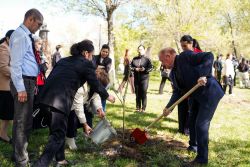
A meaningful environmental initiative was held at Khalel Dosmukhamedov Atyrau University within the framework of the nationwide “Taza Kazakhstan” campaign. Vice-rectors, faculty members, and students of the university actively participated in the event.
During the environmental campaign, 35 fruit trees were planted on the university campus. The initiative was aimed at environmental protection, the development of landscaping and greening activities, and the promotion of ecological awareness among young people.
-
Regional Panel Discussion “Joint Action, Impact, Experience”
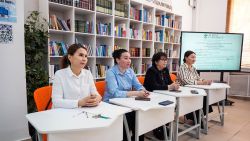
Within the framework of the United Nations Sustainable Development Goal 13 – “Climate Action,” a representative of Kh. Dosmukhamedov Atyrau University participated in the regional panel discussion “Joint Action, Impact, and Experience,” organized by Marat Ospanov West Kazakhstan Medical University.
The event featured a presentation by Gulshat Zhumatova, Master’s degree holder and Senior Lecturer of the Department of Biology and Fisheries, titled “Current Issues of Fish Reproduction and Development in the Ural–Caspian Water Basins.”
The main objective of the discussion was to exchange scientific experience at the regional level and to address environmental challenges related to maintaining the sustainability of aquatic ecosystems in the context of climate change. The participants discussed the current state of aquatic bioresources, ecological factors affecting fish population reproduction, and approaches to the sustainable use of natural resources.
-
Environmental Forum Held at Atyrau University within “Clean Kazakhstan” Campaign
A regional forum titled “Clean Kazakhstan as the Basis of Environmental Safety and Sustainable Development” was held at Kh. Dosmukhamedov Atyrau University, organized by the Department of Ecology.
The event aimed to enhance environmental awareness among youth and promote scientific interest in environmental protection.
Participants included school students (grades 8-11) and college students from across the region. Teams of 3-5 members competed.
Key topics discussed:
• climate change
• water resource management
• waste management
• implementation of green technologies
During a foresight session, participants presented environmental development scenarios up to 2035, proposing sustainable solutions and models of eco-friendly cities.
The forum became an important platform for promoting sustainable development principles in Kazakhstan.
-
Guest Lecture Held within the “Clean Kazakhstan” Project
At Khalel Dosmukhamedov Atyrau University, a guest lecture on the topic “Waste and Spill Management” was held for 1st–2nd year students of the educational programs Applied Ecology, Ecoanalytics, and Waste Management.
Invited specialists - Ainagul Bekbolatkyzy (Lead Ecologist) and Islam Abibolatuly (Ecologist), employees of West Dala LLP -delivered an informative one-hour presentation. They discussed the fundamentals of waste management systems, modern methods of safe disposal, and ways to reduce negative environmental impact.
The practical part of the event - a demonstration of the LARN kit - attracted particular interest. Participants had the opportunity to visually familiarize themselves with spill response technologies and the practical use of equipment in real conditions.
The lecture was held in an interactive format: students actively engaged in dialogue, asked questions, and participated in discussions. The most active participants were awarded souvenirs for their correct answers.
We express our gratitude to the invited experts for the engaging and informative session and wish them continued professional success and new achievements!
-
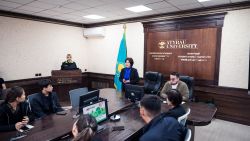
Within the framework of the United Nations Sustainable Development Goal 13 – “Climate Action,” Kh. Dosmukhamedov Atyrau University hosted the First Youth Climate Dialogue “Atyrau Youth: Climate Change and Adaptation Pathways” (Climate Talks).
During the seminar, participants attended lectures on climate change and its impact on natural resources and took part in practical sessions and workshops. The event aimed to raise youth awareness of climate issues and promote sustainable development principles.
Participants’ essays on climate topics were also reviewed, and the best works will be presented at the LCOY National Youth Climate Conference to be held at Nazarbayev University in Astana.
At the end of the seminar, all participants were awarded certificates.
-
Within the framework of the United Nations Sustainable Development Goal 13 – “Climate Action,” Kh. Dosmukhamedov Atyrau University demonstrated civic responsibility during the spring flood period.
The university community carried out a number of prompt and coordinated actions aimed at reducing the impact of the natural disaster. From the beginning of the critical period, the university administration, faculty members, staff, and students actively participated in regional emergency response efforts.
The Department of Youth Policy played a key role by organizing a group of student volunteers. Under the department’s coordination, dozens of active students formed a volunteer team and joined the emergency response headquarters to provide assistance.
Participation in this initiative became an important experience of civic responsibility for students and highlighted the importance of solidarity and mutual support during challenging times. The actions of the university youth provided moral support to local residents and became a strong example of community cooperation in addressing climate-related challenges.
- Analysis of the content of hydrogen sulfide in the air of the city of Atyrau.
- ОРГАНИЗАЦИЯ ИННОВАЦИОННЫХ ПОДХОДОВ ВНЕДРЕНИЯ ВОДЯНЫХ СКВАЖИН ДЛЯ ВОДОСНАБЖЕНИЯ СЕЛЬСКОЙ МЕСТНОСТИ
- ENVIRONMENTAL-ECONOMIC INSTRUMENTS OF ENVIRONMENTAL POLICY
- Регулирование цен на рис: формула защиты рынка
- Роль международного сотрудничества по вопросам охраны окружающей среды