Akim of Atyrau Region Visits Atyrau University
Bolat Oraluly Aksholakov, Akim of Atyrau Region, paid a special visit to Kh. Dosmukhamedov Atyrau University, where he familiarised himself with the University’s activities, material and technical facilities, modern infrastructure and educational programmes.
The regional Akim was welcomed by Salamat Idrissov Nurmukhanuly, Chairman of the Board - Rector of the University, who provided information on the University’s current development priorities, educational process, research potential, material and technical facilities, and ongoing projects.
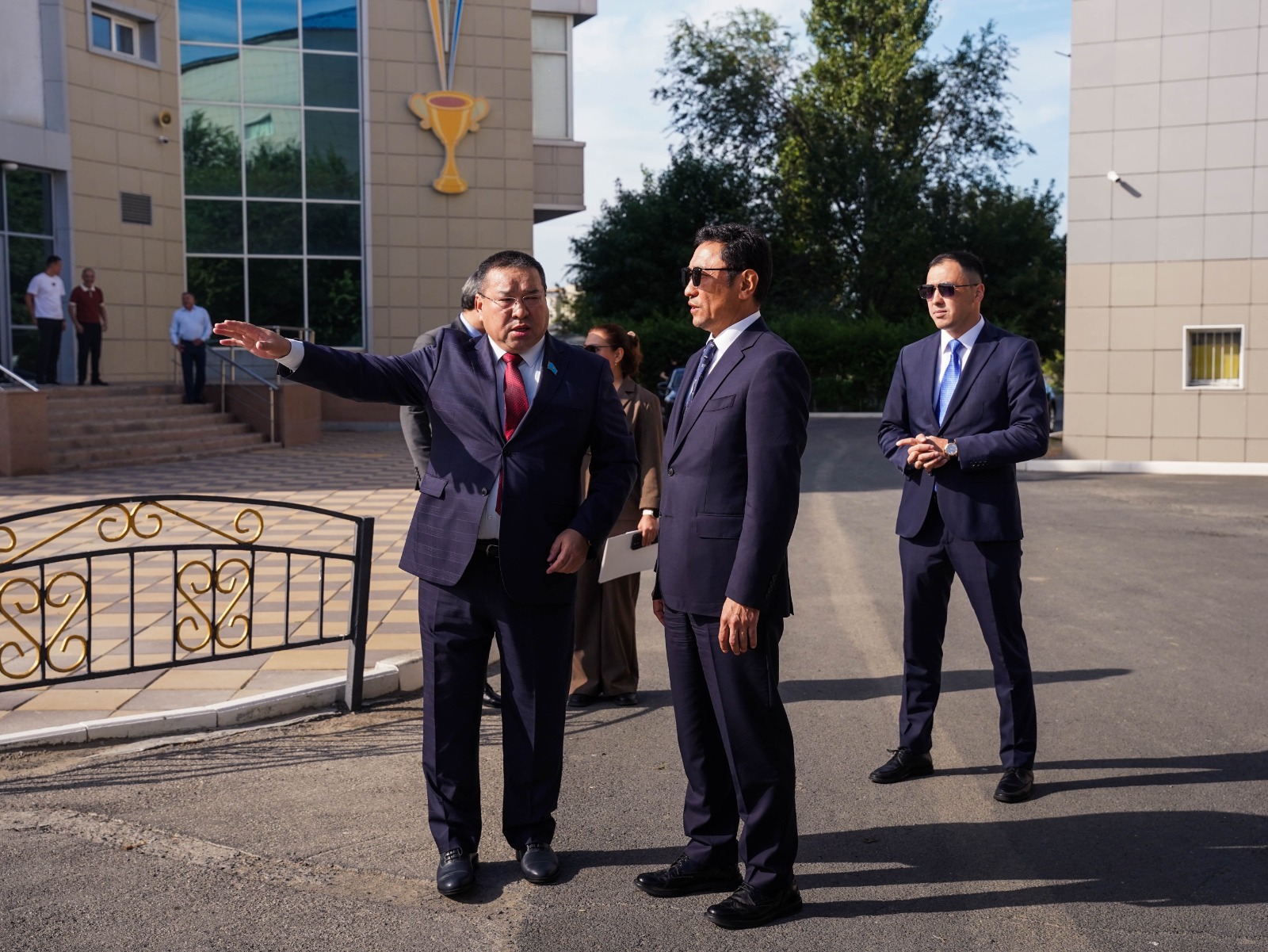
During the visit, the regional Akim first familiarised himself with the activities of the Zhaiyk Cultural and Sports Complex. The complex offers a wide range of opportunities for developing students’ cultural, creative and athletic abilities.
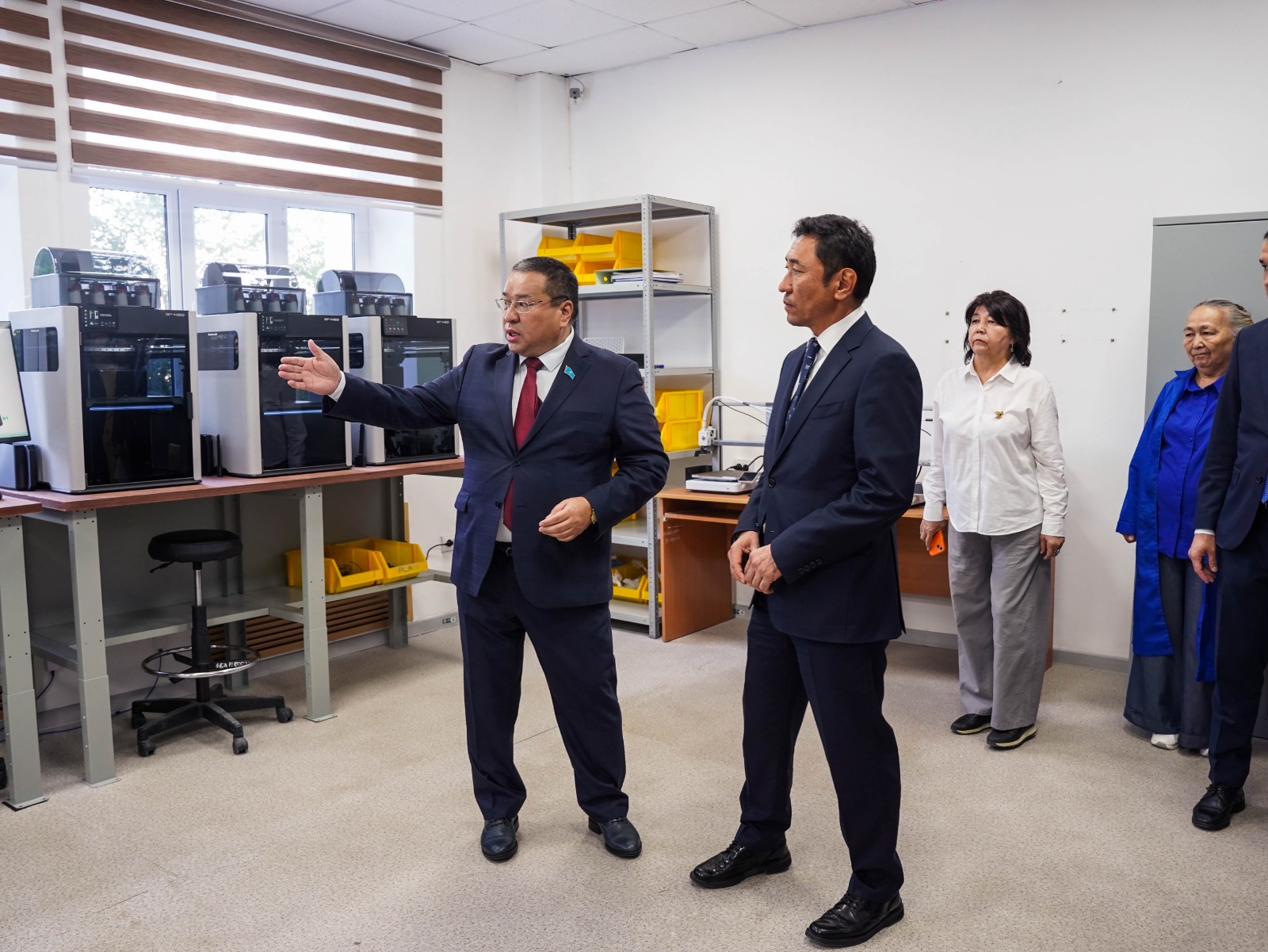
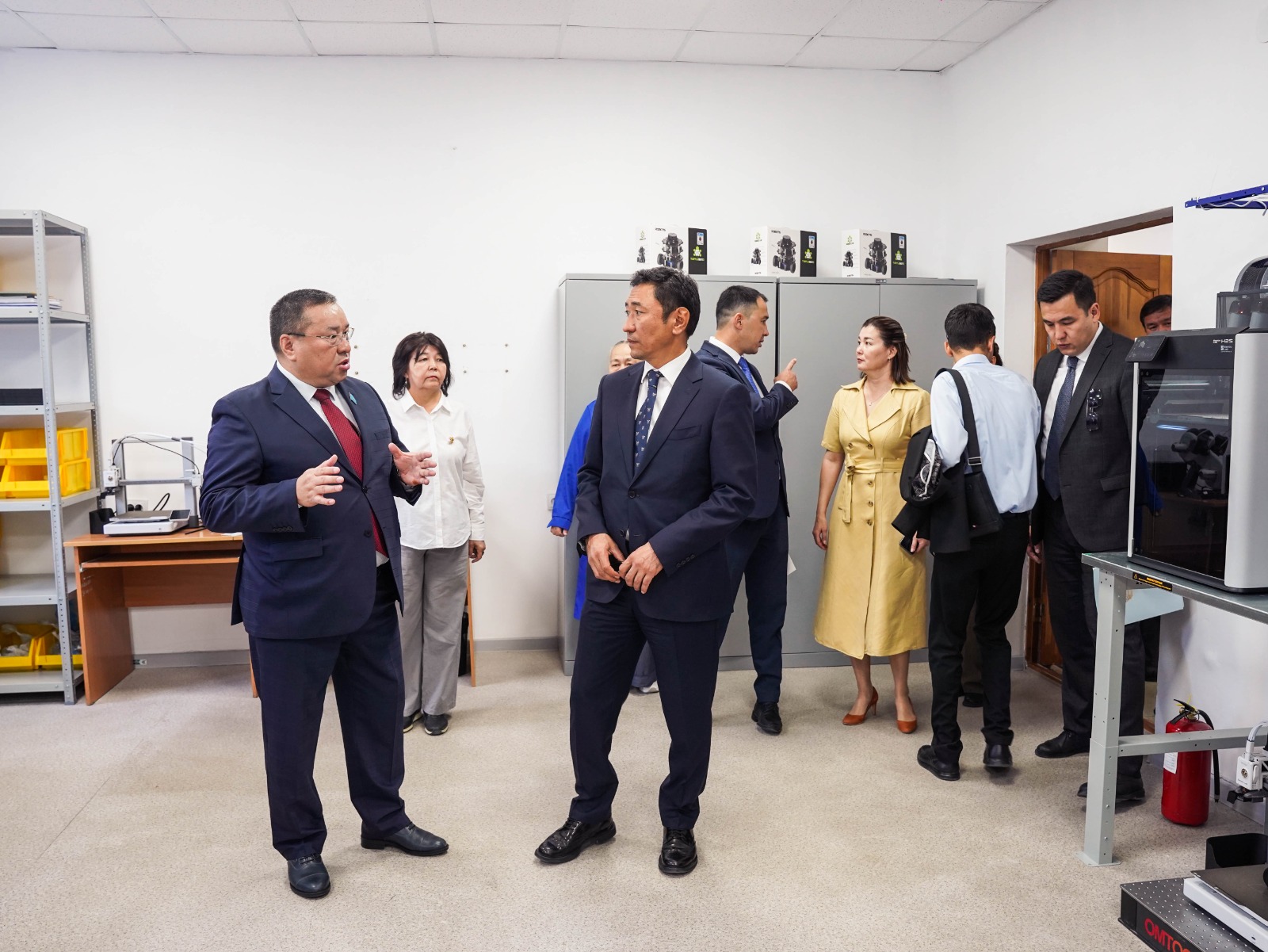
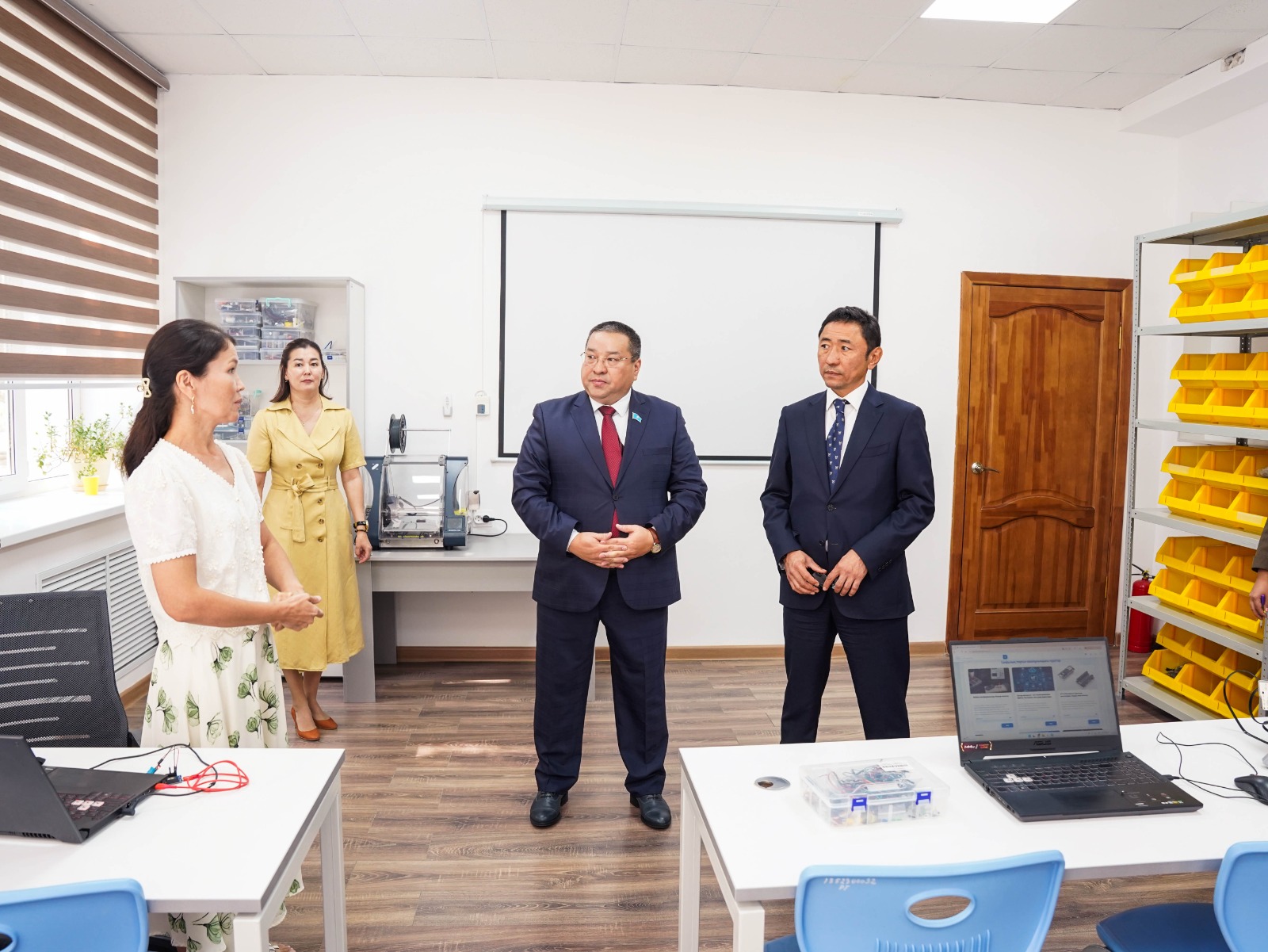
The regional Akim then visited the University’s research laboratories and learned about their activities. In particular, he was introduced to the work of the Robotics and Mechatronics Laboratory, the Laboratory for the Utilisation and Regeneration of Hydrogen Sulfide-Containing Gas and Oil Sludge, as well as a laboratory focusing on environmental technologies, resource conservation and the reuse of biomaterials.
The laboratories provide students, master’s students, young researchers and faculty members with opportunities to conduct practical and research activities using modern equipment. The research areas are aimed at addressing the region’s industrial and environmental challenges, developing new technologies and implementing scientific findings in practice.
The University’s achievements in education and its digital development initiatives were also presented during the meeting. Vice-Rector for Academic Affairs Askhat Yeralyuly delivered a presentation on the University’s performance in the Atameken ranking, its cooperation with the international educational platform Coursera, the Aisana digital system and the Ustaz School project.
The University is carrying out systematic work to improve the quality of education, introduce digital technologies into the educational process, enhance the professional competencies of faculty members and develop students’ modern skills.
Bolat Mukhambetov, Doctor of Agricultural Sciences, agronomist and Head of the Scientific and Production Centre for Biology, Geoecology and Dry Fodder Production, spoke about the activities and key research areas of the Research Institute of Ecology, Bio- and Nanotechnologies.
In particular, he presented research aimed at increasing the productivity potential of pastures and developing effective technologies for their sustainable and rational use. The research is focused on improving pasture productivity, ensuring the efficient use of natural resources and promoting the sustainable development of the agricultural sector.
Bayan Ulzhagaliyevna Kuanbayeva, Candidate of Pedagogical Sciences, Professor and Director of the Research Institute of Ecology, Bio- and Nanotechnologies, subsequently presented project DP23691820, “Development of a Teaching Aid Based on Dynamic Augmented Reality Visualisations and Interactive Models in Physics,” aimed at the commercialisation of scientific projects.
The meeting also highlighted projects developed by University researchers to address pressing environmental and agricultural challenges in the region. Priority is being given to implementing research findings in practice and integrating scientific developments with industry.
Bolat Oraluly expressed interest in the University’s material, technical and research infrastructure and emphasised the importance of integrating education and science with the socio-economic development of the region.
Today, Kh. Dosmukhamedov Atyrau University continues its systematic efforts to improve the quality of education, advance scientific research, support young researchers, develop modern infrastructure and focus scientific projects on addressing pressing challenges in the region.