Mukhamed-Salyk Babazhanov
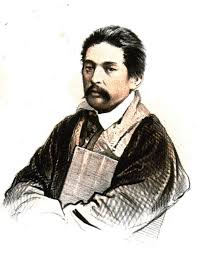
Mukhamed-Salyk Babazhanov (1832–1871)
Mukhamed-Salyk Babazhanov was an ethnographer, public figure, and educator. He received his primary education at the Russian-Kazakh school in the Horde, graduating in 1845. Six years later, he completed the Asian Department of the Neplyuev Cadet Corps in Orenburg.
From 1852 to 1855, he worked in the Chancellery of the Orenburg Border Commission. From 1855 to 1861, he served as a counselor to the Provisional Council for the Administration of the Inner Horde. In 1866–1871, he headed the Kamysh-Samar district of the Inner Horde. He was engaged in the study of ancient monuments and in collecting folklore.
In 1855, he was dismissed from service and imprisoned for two months under the pretext of alleged involvement in unrest among the Kazakhs of the Inner Horde.
In 1862, he left public service and until 1866 was engaged in livestock farming. From 1866 to 1871, he served as head of the Kamysh-Samar district of the Inner Horde.
Babazhanov published works on Kazakh customs and traditions, economy, religious beliefs, and hunting practices. He collected and studied ancient historical heritage, legends, fairy tales, epic poems, and proverbs. He sent archaeological and ethnographic artifacts related to Kazakh history and everyday life to Russian museums and scientific institutions.
In 1861, he was elected a member of the Russian Geographical Society. In 1862, for his significant contribution to the work of its ethnographic department, he was awarded the Society’s silver medal. Babazhanov was the first Kazakh to receive official recognition for his scientific achievements.
He also wrote articles expressing dissatisfaction with the colonial policy of the Russian Empire toward the Kazakh people.
Among his many scholarly works, one notable achievement was his study of a balbal stone statue of a woman discovered in the Naryn sands, for which he received a silver medal. His work “Notes of a Kirghiz about the Kirghiz” was published in Saint Petersburg in 1861. He also authored studies on the mineral resources and geographical features of Western Kazakhstan, as well as works in toponymy, ethnography, and history.