Alley of Prominent Figures
In 2019, at Kh. Dosmukhamedov Atyrau State University, the “Alley of Prominent Figures” was opened within the framework of the programmatic article “Course Towards the Future: Modernization of Public Consciousness” by the First President of the Republic of Kazakhstan – Elbasy Nursultan Nazarbayev.
The alley is dedicated to the outstanding natives of the Atyrau region who have contributed significantly to the country’s development and left a remarkable mark in the fields of education, science, culture, and the arts.
The alley is adorned with pedestals bearing busts of eight distinguished figures of our nation.
These sculptures represent eminent personalities who made an immeasurable contribution to Kazakh spirituality and undoubtedly inspire pride and strength in all Kazakh people.
Opened a year earlier in the oil-rich region, the “Alley of Prominent Figures” continues to foster the revival of the great names of the Great Steppe in the minds of future generations.
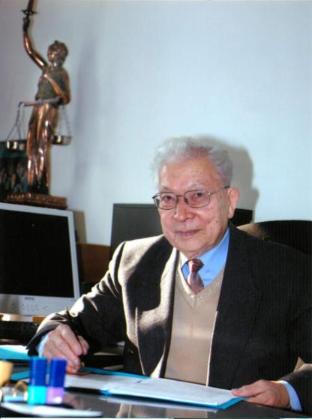
Salyk Zimanov (1921–2001)
Salyk Zimanov was a prominent public and statesman figure, a distinguished legal scholar, Doctor of Law, and Professor. He was an Academician of the National Academy of Sciences of the Republic of Kazakhstan and an Honored Scientist of Kazakhstan (1971). He was the recipient of the Peace and Spiritual Accord Prize of the First President of the Republic of Kazakhstan (2001).
From 1990 to 1995, Zimanov was elected People’s Deputy to the Supreme Council of the Republic of Kazakhstan. He served as a member of the Presidium of the Supreme Council, a member of the Committee on Foreign Relations and Interparliamentary Cooperation, and Chairman of the Committee on Veterans and Persons with Disabilities. As a highly qualified legal expert, he actively contributed to the legal establishment of Kazakhstan’s international relations after the country chose the path of sovereignty and independence, to granting state status to the Kazakh language, to introducing the institution of presidential governance, and to implementing legal and democratic reforms.
In 1992–1993, he was a member of the Consultative Council under the President of the Republic of Kazakhstan and the National Council on State Policy.
Zimanov’s research works were primarily devoted to the history and theory of state and law, the formation and development of national states in Kazakhstan and other regions of Central Asia, the state independence of the Republic of Kazakhstan, and other pressing issues. He also published several scholarly works on legal theory, traditional Kazakh legal culture, and Sharia law.
During the December 1986 events, he demonstrated civic courage. He firmly opposed the offensive statements made by high-ranking representatives of the imperial center against the Kazakh people and defended national dignity and honor with clear and compelling arguments.
After the establishment of the Republic of Kazakhstan, a new and fruitful stage began in Zimanov’s scientific and socio-political activity. The Supreme Council of Kazakhstan was tasked with adopting numerous new laws. During this critical historical period, Zimanov distinguished himself through his scholarship and statesmanship. He headed the commission for drafting the “Declaration on State Sovereignty of the Kazakh SSR” (October 25, 1990), which played a decisive role in the history of Kazakh statehood and the Kazakh people. He was also one of the leading members of the commission that drafted the Constitutional Law “On the State Independence of the Republic of Kazakhstan” (December 16, 1991), another highly significant political act in the nation’s history. He served as a member of the Constitutional Commission for drafting the new Constitution of the Republic of Kazakhstan within the Supreme Council, where he led the expert group.
His research work “The Theory and Practice of Autonomization in the USSR” (1998) generated considerable resonance among the scientific community of the CIS countries. In it, he analytically substantiated the collapse of the powerful USSR and the formation of new independent republics on the basis of its former autonomous territories.
Zimanov served as the scientific editor of the ten-volume encyclopedia “Ancient Laws of the Kazakhs.” He was a laureate of the Peace and Spiritual Accord Prize of the President of the Republic of Kazakhstan (1993) and the State Prize of Kazakhstan (2002). He was awarded the Order of Parasat (2002), the Order of the Patriotic War (twice), the Order of the Red Star, and numerous medals.
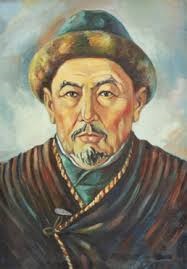
Ygylman Shorekov (1876–1932)
Ygylman Shorekov was a broad-minded epic poet who lived at the crossroads of two centuries. The work that brought him wide recognition and secured him an honored place in the history of Kazakh literature was the poem “Isatay–Makhambet.”
This is a historical poem depicting the peasant uprising that shook the Bukey Horde in the 1830s. The poet appears to have carefully studied the details of the uprising, as well as the fate and background of his future literary heroes, over many years. Although he did not consult archival sources, he relied on oral narratives and legends preserved in the collective memory and passed down from generation to generation. Based on these, he wrote what is considered one of the finest works of Kazakh poetry — a single yet truly remarkable and famous poem.
Very little other literary heritage has survived from the poet. His works “About Poets,” “About Orators,” “About Heroes,” as well as several poems and reflections, were published in 1924 in Tashkent in the journal Saule (No. 41), and later included in the 1976 collection “Isatay–Makhambet.”
The first part of the poem “Isatay–Makhambet” was published during the poet’s lifetime in 1924 in Tashkent. It was later republished several times as a separate book and in the collection “Folk Poems” (1939).
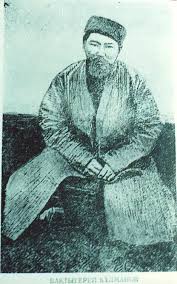
Baktygerey Akhmetuly Kulmanov
Baktygerey Akhmetuly Kulmanov was a prominent Alash public figure, a member of the Alashorda government, a deputy of the First and Second State Dumas, an orientalist, and one of the first Candidates of Sciences. He was of noble descent, tracing his lineage from Abulkhair – Nuraly – Sultan Yesim.
From 1872 to 1881, he studied for nine years at the Orenburg Boys’ Gymnasium, becoming one of the first Kazakhs to graduate from it and receiving a silver medal. In 1881, he enrolled in the Faculty of Law at Saint Petersburg University. He studied in the first year for three consecutive years until December 1883, remaining voluntarily at his own request. The university administration did not allow him to remain for a fourth year, so in January 1884 he transferred to the Faculty of Oriental Languages, graduating on March 9, 1889, with Diploma No. 877.
He received excellent marks in Arabic, Persian, Ottoman, Tatar languages, and Russian lexicography. By decision of the University Council on September 17, 1888, he was deemed worthy of the academic degree of Candidate of Sciences.
After graduation, he returned to his homeland and from 1889 served as the administrator of the Kamysh-Samar district under the Astrakhan Governor. While serving as administrator, he opened schools and worked to increase the number of medical stations. In 1901, on the occasion of the 100th anniversary of the Bukey Horde, he led a delegation of Bukey Kazakhs to an audience with the Russian Emperor and delivered an address on behalf of the delegation.
From July 22, 1903, to September 1906, he served as a counselor to the Provisional Council of the Bukey Horde. He retired in 1906.
In 1907, Kulmanov was elected as a deputy to the Second State Duma. His election for two consecutive terms testifies to his high authority among the people.
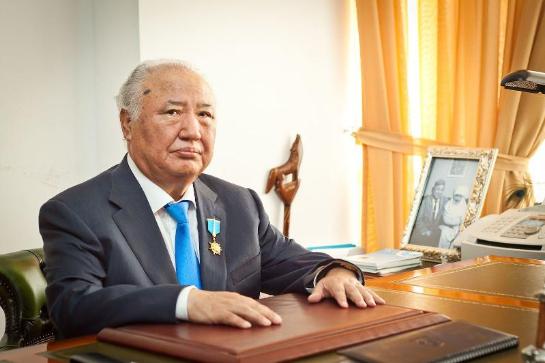
Abish Kekilbayev (1939–2015)
Abish Kekilbayev was a People’s Writer of Kazakhstan and a prominent statesman and public figure. He served as the first State Secretary of the Republic of Kazakhstan (1996–2002) and as a Deputy of the Senate of the Parliament (2002–2015).
He belonged to the Adai clan. His passion for literature began during his school years. On May 5, 1957, as an active rural correspondent for Leninshil Zhas, he was awarded a certificate of honor by the Central Committee of the Komsomol of Kazakhstan.
In 1957, he enrolled in the Faculty of Philology at Kazakh State University. While studying, he led the university literary association and supported emerging young writers. During his final year, he worked at the newspaper Kazakh Adebieti.
His professional career included:
• 1962–1965 – Head of Department at Leninshil Zhas newspaper
• 1965–1968 – Ministry of Culture of the Kazakh SSR
• 1968–1970 – Service in the Soviet Army
• 1970–1975 – Editor-in-Chief at Kazakhfilm Studio
• 1975–1984 – Instructor and Sector Head at the Central Committee of the Communist Party of Kazakhstan
• 1984–1986 – Deputy Minister of Culture of the Kazakh SSR
• 1986–1988 – Second Secretary of the Board of the Writers’ Union of Kazakhstan
• 1989–1990 – Chairman of the Presidium of the Central Council for the Protection of Historical and Cultural Monuments
• 1990 – Department Head at the Central Committee of the Communist Party of Kazakhstan
• 1991 – Chairman of the Committee on Culture, Language, and Interethnic Relations of the Supreme Council
• 1992–1993 – Editor-in-Chief of Egemen Kazakhstan newspaper
• 1993–1995 – State Counselor of the Republic of Kazakhstan
• 1994–1995 – Chairman of the Supreme Council of Kazakhstan
• 1996–2002 – State Secretary of the Republic of Kazakhstan
• From 2002 – Deputy of the Senate of the Parliament of Kazakhstan
He was elected twice to the Supreme Council and once to the Mazhilis on an alternative basis.
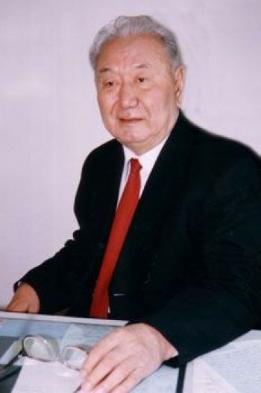
Zeynolla Kabdolov (1927–2006)
Zeynolla Kabdolov was a writer, literary scholar, educator, Doctor of Philology, Professor, Academician of the National Academy of Sciences of Kazakhstan, People’s Writer of Kazakhstan, and Honored Scientist of the Kazakh and Kyrgyz Republics.
He was born in Dossor settlement, Makat District, Atyrau Region. In 1945, he enrolled in the Faculty of Philology of Kazakh State National University (now Al-Farabi Kazakh National University), graduating with honors in 1950. He devoted more than fifty years to teaching and research at this institution.
For twenty-five years, he headed the Department of Literature at Al-Farabi Kazakh National University. He also served as Editor-in-Chief of the journal Zhuldyz and the newspaper Kazakh Adebieti, and as Secretary of the Writers’ Union of Kazakhstan.
He authored the novels “Ushkyn” and “Zhalyn,” short stories included in the collections “Adam” and “Syr,” and the drama “The Inextinguishable Fire,” staged at the Mukhtar Auezov Academic Theater and several regional theaters. For his novel “My Auezov,” he was awarded the State Prize of the Republic of Kazakhstan in 1998.
Until the end of his life, he chaired the Permanent Dissertation Council for awarding doctoral degrees in Philology at Kazakh State National University.
His numerous works include two-volume collected works, the play collection “The Unnoticed Hero,” the novels “My Auezov,” “Ushkyn,” “Zhalyn,” selected works, and five-volume collected editions published by Zhazushy and Sanat publishing houses.
He also worked as a translator, rendering into Kazakh:
• Alexander Pushkin’s “The Tale of the Fisherman and the Fish”
• Articles and letters by Nikolai Gogol
• Valentin Dobrovolsky’s “Three Men in Gray Overcoats”
• Vitaly Zakrutkin’s “The Cossack Village on the Water”
• Alexander Ostrovsky’s “Money to Burn”
• Maxim Gorky’s “Children of the Sun”
• Nazim Hikmet’s “The Unnoticed Hero”
He was awarded the Orders of “Friendship of Peoples,” “Kurmet,” and “Parasat,” numerous medals, and Honorary Certificates of the Supreme Council of the Kazakh SSR. He was also a laureate of the First Degree Prize named after Sh. Ualikhanov of the Academy of Sciences of Kazakhstan. His literary works have been translated into several foreign languages.
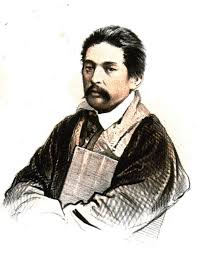
Mukhamed-Salyk Babazhanov (1832–1871)
Mukhamed-Salyk Babazhanov was an ethnographer, public figure, and educator. He received his primary education at the Russian-Kazakh school in the Horde, graduating in 1845. Six years later, he completed the Asian Department of the Neplyuev Cadet Corps in Orenburg.
From 1852 to 1855, he worked in the Chancellery of the Orenburg Border Commission. From 1855 to 1861, he served as a counselor to the Provisional Council for the Administration of the Inner Horde. In 1866–1871, he headed the Kamysh-Samar district of the Inner Horde. He was engaged in the study of ancient monuments and in collecting folklore.
In 1855, he was dismissed from service and imprisoned for two months under the pretext of alleged involvement in unrest among the Kazakhs of the Inner Horde.
In 1862, he left public service and until 1866 was engaged in livestock farming. From 1866 to 1871, he served as head of the Kamysh-Samar district of the Inner Horde.
Babazhanov published works on Kazakh customs and traditions, economy, religious beliefs, and hunting practices. He collected and studied ancient historical heritage, legends, fairy tales, epic poems, and proverbs. He sent archaeological and ethnographic artifacts related to Kazakh history and everyday life to Russian museums and scientific institutions.
In 1861, he was elected a member of the Russian Geographical Society. In 1862, for his significant contribution to the work of its ethnographic department, he was awarded the Society’s silver medal. Babazhanov was the first Kazakh to receive official recognition for his scientific achievements.
He also wrote articles expressing dissatisfaction with the colonial policy of the Russian Empire toward the Kazakh people.
Among his many scholarly works, one notable achievement was his study of a balbal stone statue of a woman discovered in the Naryn sands, for which he received a silver medal. His work “Notes of a Kirghiz about the Kirghiz” was published in Saint Petersburg in 1861. He also authored studies on the mineral resources and geographical features of Western Kazakhstan, as well as works in toponymy, ethnography, and history.
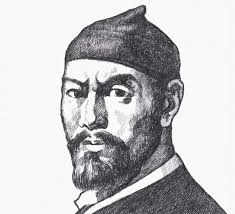 Murat Monkeuly (1843–1906)
The prominent poet Murat Monkeuly, who lived in the second half of the 19th century, was born in 1843 in the village of Karabau, Kyzylkoga District, in present-day Atyrau Region. Orphaned at an early age, he was raised by his elder brother.
He received his initial education from a village mullah, where he learned Arabic. From childhood, he began composing poetry and became known in his community as a “poet boy.” He learned from the renowned Yeset bi and the poet Abyl, and later mentored the zhyrau Muryn Sengirbayuly. In 1860, after meeting the poet Zhylkyshy, he began participating in poetic competitions (aitys).
At the age of 17, he competed with Zhylkyshy; at 20, with Bala Oraz; and at 25, with poets such as Zhaskelen, Zhantoly, Sholpan, and Tynyshtyk, emerging victorious. These aitys became a true school of poetic mastery for him. Known for his bold character, sharp wit, and quick repartee, Monkeuly consistently stood out. His name remains in literary history not only as a master of aitys but also as a major epic poet.
Murat was one of the most significant figures in Kazakh literary history and a leading representative of the “Zar Zaman” poets. From a young age, he learned from the eloquent Yeset. Gifted with exceptional talent, he grew up memorizing the spiritual heritage and heroic epics of the people. The works of Sypyrа Zhyrau, Asan Kaigy, Kaztugan, Zhiembet, Shalkiiz, and other historical figures have reached us through Murat’s recitation.
A great son of his people, he transformed national history into expressive literary works and widely promoted them. Murat longed for his country’s independence and composed poems opposing colonial subjugation, thus earning the title of a “Zar Zaman” poet. Grieving the loss of ancestral lands, he nostalgically recalled the past of his native steppe.
His most renowned work is the poem “Ush Kiyan.” In it, he speaks of the erosion of old traditions and the moral decline of society. The confiscation of fertile lands through colonization and the resulting hardship of the people deeply troubled him.
Among his notable works are “Saryarka,” “Alas, Fleeting World,” “Kaztugan,” “Karasai-Kazi,” and others. He also composed didactic poems such as “Death,” “The Girl,” “Why Gift a Swift Horse?,” “Can Anything Be More Beautiful than a Horse?,” and “In This False Mortal World.”
Murat contributed significantly to the development of the Kazakh literary language. His works clearly reflect the protest of the poor against oppression, especially against tsarist authority. He raised important social issues and frequently turned to the past of his people, creating a visible connection between history and his present.
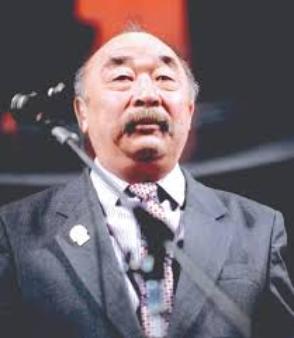
Nurmukhan Seitakhmetuly Zhantorin (1928–1990)
Nurmukhan Zhantorin was an actor and director, People’s Artist of the Kazakh SSR (1966) and laureate of the State Prize of the Kazakh SSR.
After finishing school, he moved to Almaty and enrolled in a school for projectionists. During this time, teachers recognized his acting talent, and he became a student at the Almaty Acting School. Soon after, he was admitted directly to the third year of the Acting Faculty of the Tashkent Institute of Theater Arts, graduating in 1952.
From 1952 to 1967 and again from 1988 until the end of his life, he performed on the stage of the Kazakh Drama Theatre. From 1967 to 1988, he worked as an actor at the Kazakhfilm studio.
His portrayal of Baybars in the film “Sultan Baybars” (1989), directed by Bulat Mansurov, became a major achievement not only for Zhantorin but for Kazakh cinema as a whole. This role marked the peak of his acting mastery. For this performance, he received a special diploma and the award “For Outstanding Contribution to the Acting Profession” at the All-Union Film Actors Festival “Constellation–90.”
As a director, together with Tsoy Guk In, he staged “Forest Ballad” (1972), and with N. Zhaynakov, “The Third Side of the Medal” (1976).
He was awarded the honorary title of Honored Artist of the Kazakh SSR (1959), the Order of the Red Banner of Labor (1959), the title of People’s Artist of the Kazakh SSR (1966), the commemorative medal “For Valiant Labor in Commemoration of the 100th Anniversary of Lenin’s Birth” (1970), the Honorary Certificate of the Supreme Council of the Kazakh SSR (1978), and the Order of Friendship of Peoples (1988). He was also awarded the Order of the Red Banner of Labor for a second time and received honorary certificates from the Supreme Councils of both the USSR and the Kazakh SSR.