Back
15 February 2026
“Taza Kazakhstan”: Presentation of Innovative Student Environmental Projects
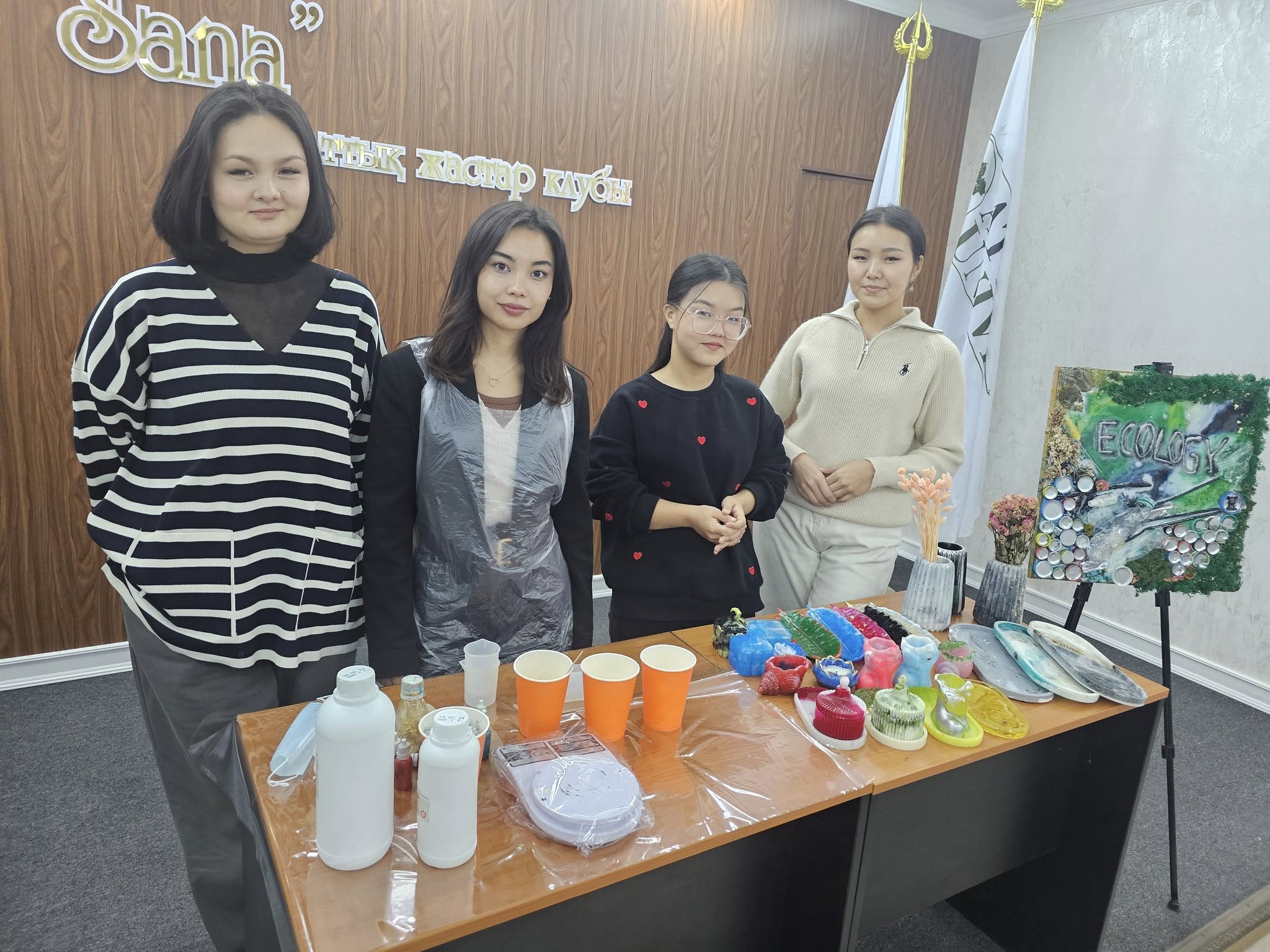
On December 5, 2024, within the framework of the nationwide environmental campaign “Taza Kazakhstan,” an exhibition presenting innovative projects and creative ideas of students from Atyrau University named after Kh. Dosmukhamedov was held for media representatives. The projects were aimed at addressing pressing environmental issues.
The projects of the university’s environmental club “Ecos,” particularly the 2024 startup project “Production of epoxy resin products using glass waste,” demonstrate students’ active involvement in solving regional environmental challenges. This initiative clearly reflects the practical application of theoretical knowledge and represents a significant contribution to the “Taza Kazakhstan” campaign.
Project Analysis:
“Production of Epoxy Resin Products Using Glass Waste” (2024 Startup):
This is one of the most concrete and promising projects. Using glass waste as a filler in epoxy resin is a перспективное направление in recycling and waste utilization.
“Production of Sulfur Concrete from Sulfur Waste”:
This project has strong potential in the Atyrau region due to the availability of sulfur waste from the oil and gas sector. Key aspects include studying the strength and durability of the material and comparing its cost-effectiveness with conventional concrete.
“Production of Paving Blocks Using Cigarette Waste”:
This original project addresses the issue of cigarette butt disposal. An important factor is assessing the environmental safety of the resulting material.
“Production of Bioplastic”:
Producing bioplastic from local raw materials has high potential in terms of import substitution and reducing environmental impact. Key challenges include identifying optimal raw materials and developing biodegradable plastic production technology.
The success of the “Ecos” club projects can serve as an inspiring example for other students and promote environmentally responsible practices in society. Supporting such initiatives is an important step toward creating a cleaner and more sustainable environment in Kazakhstan.