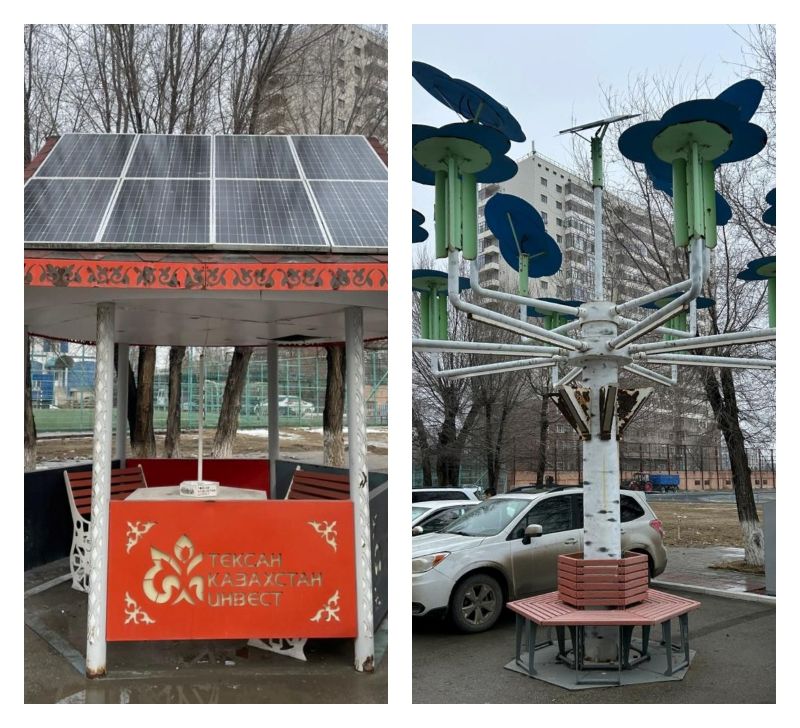
Renewable Energy Development
Development of Renewable Energy at Kh. Dosmukhamedov Atyrau University
The development of renewable energy is one of the key areas of research activity at Kh. Dosmukhamedov Atyrau University. The university conducts research aimed at studying and implementing technologies for the use of alternative energy sources such as solar and wind power. These studies contribute to improving energy efficiency, reducing environmental impact, and developing environmentally friendly technologies.
Research teams at the university work on developing and improving methods for the use of renewable energy sources under regional conditions. Special attention is paid to studying the potential of natural resources in the Atyrau region and surrounding areas for the effective use of solar and wind power installations. The results of these studies are used in the educational process and in the implementation of scientific projects aimed at sustainable development.
In addition, the university actively trains specialists in ecology and energy who are capable of implementing modern environmentally safe technologies. Thus, the development of renewable energy at Kh. Dosmukhamedov Atyrau University contributes to strengthening the scientific potential of the region and supporting the global transition to sustainable energy sources.
Sustainability Policy
The university actively implements environmental and energy initiatives. It participates in the international UI GreenMetric ranking of sustainable universities, which evaluates environmental infrastructure, energy efficiency, and the use of renewable energy sources.
In 2025, the university ranked 687th in the world and 6th among universities in Kazakhstan, confirming the development of its “green” policy.
This policy includes:
- implementation of environmentally friendly technologies;
- development of scientific research in climate and energy;
- support for student innovation projects.
Research and Innovation
The university conducts research related to:
- sustainable development and climate;
- energy technologies;
- environmental safety of the region.
Students and young researchers participate in international forums and discussions dedicated to the energy of the future, including topics such as hydrogen energy, energy storage, and carbon capture technologies (CCS).
Student Environmental Projects
Kh. Dosmukhamedov Atyrau University actively supports initiatives aimed at environmental and energy projects. The university has an environmental club called “Ecos”, which develops environmental and energy startups.
One of the club’s projects involves the production of epoxy resin products using recycled glass. This initiative helps reduce waste and promotes environmentally safe recycling technologies.
In addition, the Department of Ecology conducts research on sulfur-based composite materials and the production of bricks from recycled cigarette waste. These studies aim to find innovative solutions for waste recycling and the development of environmentally sustainable construction materials.
Such projects help students:
- apply theoretical knowledge in practice;
- create innovative environmental solutions;
- participate in national environmental programs such as “Taza Kazakhstan.”
International Cooperation
The university develops research projects and educational programs in cooperation with other universities and research centers. This collaboration is aimed at:
- exchanging scientific knowledge;
- developing joint research;
- implementing modern technologies in energy and sustainable development.
Importance for the Region
The development of renewable energy and environmental projects at the university is important for the Atyrau region, which is one of the major oil and gas centers of Kazakhstan.
Environmental research and innovations help to:
- reduce environmental impact;
- develop alternative energy sources;
- train specialists in the field of the green economy.
Kh. Dosmukhamedov Atyrau University actively develops renewable energy through scientific research, student environmental projects, and international cooperation. These initiatives contribute to building an environmentally sustainable university and training specialists for the green economy of the future.